
















Cedar Rapids Community School District (CRCSD) members have brought to light how different school models affect sports, fine arts, and community relationships. However, the question is, which school proposal is the best option for everyone?
With the recent proposals stirring up controversy, the numbers don’t lie. The majority of all staff and district members agree that the intermediate school model works best to accommodate and grow all extracurricular programs within the district.
“The intermediate model reduces the number of middle schools (grades seventh to eighth) from six buildings to three. Along with the cost savings that this provides, it also allows us to have more equity in our programming,” Principal of Harding Middle School Jessica Johnson said.
Although some worry about the number of transitions between schools, Choir Director Storm Ziegler believes the direct feeder pattern will help prevent students from feeling displaced.
“The one thing I see being said is the number of transitions between schools,” Ziegler said. “What’s left out is that research says there are ways to mitigate the negative aspects of that additional transition, and one of them is to maintain peer groups.”
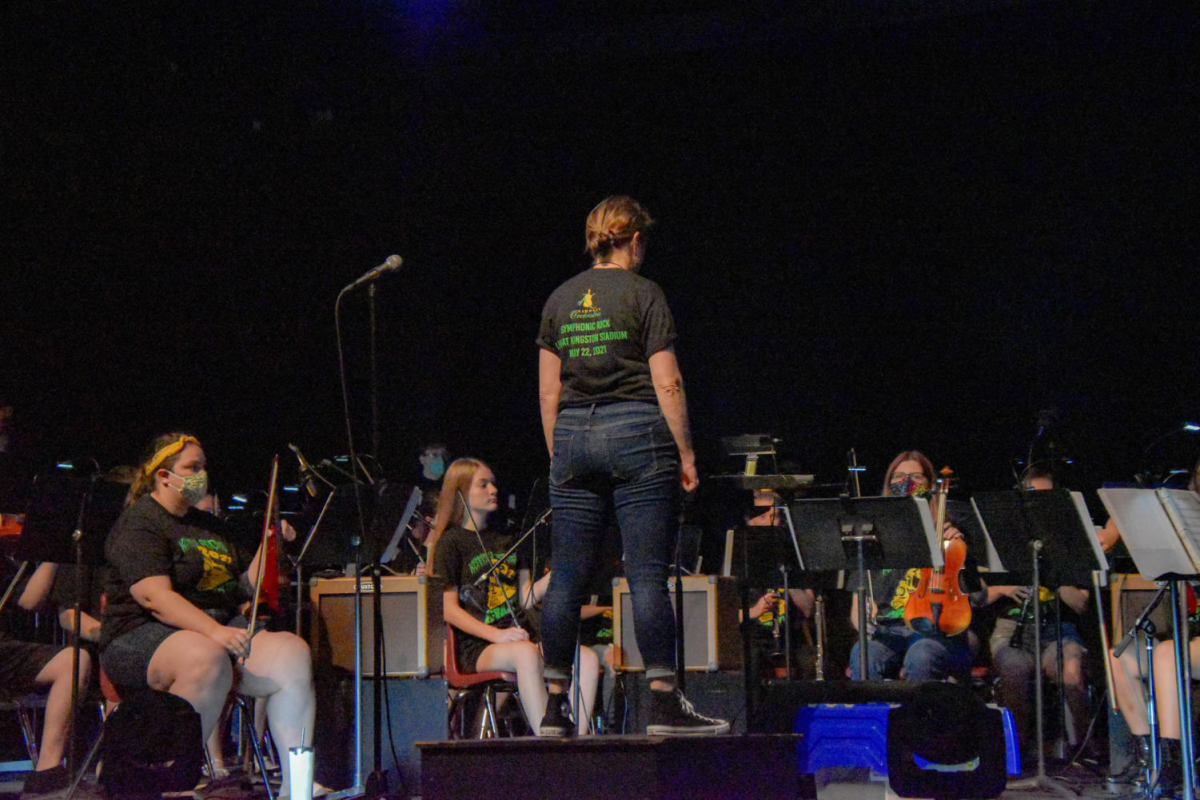
Band, show choir, and orchestra would begin a year earlier, helping to build connections between students and staff.
“We think kids acting, creating art, singing and playing instruments with each other starting in fifth grade all the way through high school is going to have massive benefits,” Ziegler said.
Schools are intended for education, but when looking for enrollment, parents and families tend to look into sports and extracurricular activities first.
“I believe that activity programs are the front porch of a school district,” Ziegler said. “When people are moving in and they’re trying to decide what school to go to, they kind of assume everyone’s teaching math and everyone’s teaching language, but if they see the show choir and the football team and the art exhibit, that is what’s going to make them know that their kid’s going to want to become a part of the fabric of the school.”
The biggest focus going into the 2027-2028 school year will be upgrading sports and fine arts to accommodate grades from fifth to twelfth. Middle schools are being broken up into five to six schools, giving better opportunities for recruitment, higher performing sports programs and fewer coaching contracts.
“Our families say they want sports,” Kennedy principal Jason Kline said. “Our families spend a lot of money on club sports. And a lot of families can’t afford club sports- we can move the number of contracts from seventh and eighth grade, and we can take some down to the fifth and sixth grade and start everything earlier.”
Academic, social, and emotional needs alter drastically between fifth and eighth grade. By grouping the fifth and sixth grades in one building and the seventh and eighth in another, staff are provided the tools for the necessary focus on age-specific needs of students.
“In my building, I see many differences between sixth and eighth-grade students. Their academic, physical and social-emotional needs vary greatly,” Johnson said. “I like the idea of having fifth and sixth grade separate so that staff can really cater and focus on their needs, which will look different than it will for seventh and eighth grade students.”
A big part of this change is due to the rapid decline in student enrollment. The hope is that these changes will strengthen all district programs to better compete with surrounding schools.
“I think if we shift to this model and increase the preparedness of our younger kids coming, that will ultimately increase the quality of what our programs are producing,” Ziegler said. “That’s going to make people want to stay.”
As the board progresses with the options in depth, taken into consideration is the overwhelming attention is given to the intermediate model over the five to eight model.
“Every single survey that has been done, the intermediate model has been ahead in terms of polling, over the five to eight model,” Kline said. “The five to eight model is not, even amongst parents, more popular than the intermediate model.”
Despite the numbers, board members have stayed indifferent during the process to explore the best option for everyone.
“The type of programs you’re talking about, sports, fine arts, and so on, extend opportunities and have a tremendous benefit to the quality of education,” CRCSD board member David Tominsky said. “When you think about competitiveness and the quality of the programming if executed properly…regardless of the model that you choose, there could be an actual real benefit to all extracurriculars.”