














The Cedar Rapids Community School District (CRCSD) is stuck at a crossroads. Instead of investing in our schools and supporting our students, they are being forced to focus on budget cuts, which have led to drastic proposals, school closures, and staff reductions.
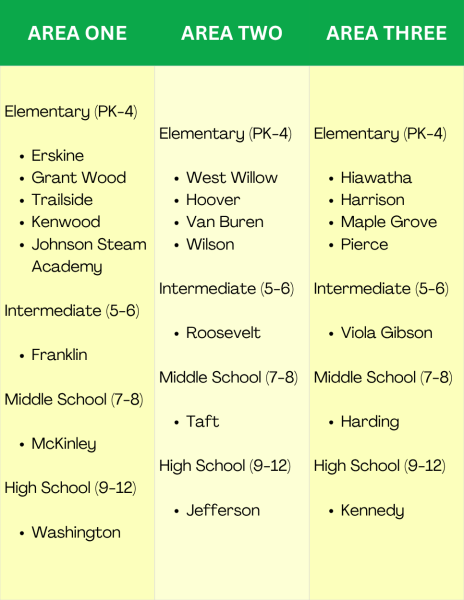
One of those decisions is the Boundary or the Consolidation plan. The different models will affect more than just the body line. In the Intermediate model, Kennedy High School would be a part of area three.
As proposals emerge overnight, our community seems to be losing faith in our leaders and the direction they are taking. While working on this article, it was difficult to keep up with all the different recommendations and proposals introduced at nearly every meeting. Last year, the district was heavily focused on implementing pathways and promoting long-term opportunities for students. Looking back now, it feels worrying that so many people did not see these financial issues coming sooner.
“I am trying to keep an open mind, but I am growing weary of trusting in what comes next,” Sophomore Vice President Jordyn Velitchkov said. “As a student, I’ve tried to stay up to date on district policies that directly affect me and have noticed that many of our issues are internal, stemming from uneven income.”
These changes extend beyond Kennedy, affecting families across the district, including those in Jefferson and Washington.
“I will certainly say that if we are speaking of budget cuts and schools closing, we might need to investigate why these ideas keep coming up. Another concern is the failure to pass school bonds, particularly those for schools serving low-income students, such as Jefferson,” Jefferson senior Yashaun Ferguson said. “I do believe that Jefferson needs reconstruction through the whole building, internally and externally.”
The implications of school closures extend far beyond cutting budgets. Such decisions can undermine established community ties, displace students, and force families to relocate their children to schools far from their current location. For many parents, choosing where to live is heavily influenced by the schools they want their children to attend, and these policies disrupt that sense of stability.
“The superintendent’s responsibility, which I’m sure she recognizes, is to prioritize the students and prepare us for a better future,” Velitchkov said. “I believe serious district funding and planning reform is necessary to achieve this goal, and it starts with Dr. Lanin’s approach to tackling these issues.”
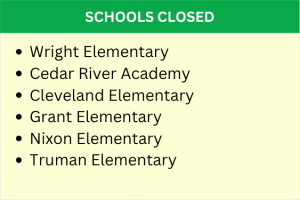
The Intermediate model will be implemented by the closure of six schools: Nixon, Wright, Cedar River Academy (CRA at Taylor), Truman, and Cleveland. These schools serve children aged five to eleven, who will need to transition to different educational facilities as a result of the decision.
“My cousins went to Nixon, and honestly, I like the way our school district was before, but with the budget cuts, I’m not completely sure the people in charge will make the best decisions,” senior Michel Kibaba said. “I just hope they do what’s best for the students.”
It is difficult not to feel frustrated watching these policies unfold. Students should be the district’s number one priority when making decisions like these, especially younger children who should not have to worry about whether their schools are next for closure or demolition. After all, students are the ones walking through overcrowded hallways, adjusting to unfamiliar schools, losing trusted teachers, and watching longtime traditions disappear along with the schools they once called home.