
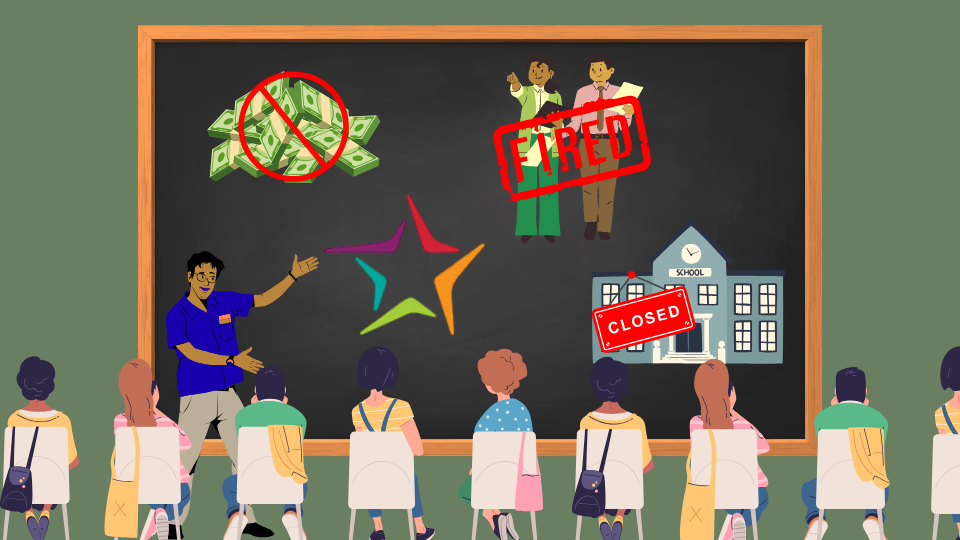














The Cedar Rapids Community School District’s (CRCSD) newest proposal, plans to shut down multiple elementary schools and start an intermediate model of schooling. This change is driven by a need for a clear feeder pattern and estimated $1-$1.5 million in savings per building annually. However, the question remains if these changes will help or hurt the district.
“I know that there are school districts in the immediate area that do utilize this model. It was utilized because of the number of students and the space they had available. They did it because they had too many kids in those grades originally,” Iowa Senator Molly Donahue said. “There is no data for the Cedar Rapids Community School District to utilize to find out if that’s actually a good model for student outcomes or not and that is my biggest concern. I want the best for our kids, but I want it to be data driven in research to prove its effectiveness.”
The CRCSD is considering splitting the district into three areas. All three areas contain two different options for the feeder pattern. Ultimately, students end up at high schools, Kennedy High School, Jefferson High School and Washington High School. The pattern for the elementary schools will consist of preschool to fourth grade, intermediate schools with fifth and sixth grade, middle schools containing seventh and eighth grade and high schools remaining the same.
“There are fewer opportunities for the intermediate age kids to do peer groups with younger students as many do now. It creates another transition for younger students rather than giving them that security of more of the family neighborhood school feeling,” Donahue said. “Before reorganizing schools or feeder patterns, the district must first demonstrate fiscal accountability, clearly explain how we got here, and show that students—not buildings or budgets—are guiding the decisions. Families, educators, and community members deserve transparency, time to understand the implications, and a real seat at the table.”
Area one, options one and two plans to endorse selected elementary schools including Trailside, Kenwood, Erskine and Grant Wood. The intermediate school will be made up from Franklin Middle School feeding into Washington, and the schools that are being considered for closing are Wright and Johnson.
Area two options include Van Buren, Hoover, West Willow and Grant as elementary schools. These options chose Wilson as the intermediate schools ending up at Jefferson, resulting in the possible shut down of Cleveland and Cedar River Academy (CRA).
Area three options include elementary schools Maple Grove, Harrison, Viola Gibson and Hiawatha. Area three will endorse Taft Middle School as the intermediate school, eventually sending students to Kennedy High School. This area plans to shut down Nixon and Pierce.
The split of the district is partially a result of capacity throughout buildings. 11 buildings are operating at 70% capacity with around 35,000 empty seats throughout the district, which is equivalent to four elementary schools and two middle schools. Continuing to use these buildings will cost CRCSD millions of dollars that could be used to support students and staff.
“If we are going to make changes this significant, they should be intentional, equitable, and developmentally appropriate—because rushing to fix a financial mistake with educational disruption only risks creating long-term harm for students and communities,” Donahue said.
The Intermediate model schools will try to maximize efficiency in capacity. The proposal will put a cap on how many students attend each building.
- Elementary (K–4): 500 students
- Intermediate (5–6): 700 students
- Middle School (7–8): 700 students
- High School (9–12): 1,400 students
On Jan. 12, the proposal of the intermediate schools will be brought to the board, elaborating on specific facilities and timelines of the projects phasing.
“My hope for the Cedar Rapids Community School District is that we slow this process down and do it right,” Donahue said. “Major structural changes—especially those that affect how children learn, where families send their kids, and where educators work—should be grounded in solid data, research, and meaningful community input, not rushed decisions driven by a $12 million overspending problem that was allowed to happen by the board.”

